



Stargazing Tenerife December 2026: What to See from Mount Teide
December is one of the most exciting months for stargazing in Tenerife, bringing some of the year's most spectacular constellations, brilliant planets and one of the most anticipated meteor showers.
The magnificent Orion constellation dominates the winter sky, the Pleiades sparkle above Teide National Park, and the Andromeda Galaxy remains visible during the evening.
But December 2026 has something particularly special in store.
The Geminid meteor shower peaks on 13–14 December, with favourable dark-sky conditions giving us an excellent opportunity to spot shooting stars.
Add Saturn, Jupiter, the winter constellations and a spectacular Christmas Eve Supermoon, and there's plenty happening above Mount Teide.
Join Night Skies Tenerife for much more than a stargazing tour. Your evening combines a light-hearted guided journey through the volcanic landscapes of Teide National Park, sunset with a complimentary glass of cava or orange juice, optional three-course Canarian dining at 2,130 metres and expert-led astronomy beneath Tenerife's remarkable night skies.
Galaxies, Star Clusters and Nebulae
The Orion Nebula: A Stellar Nursery
December welcomes back one of the most extraordinary objects in the winter sky.
The Orion Nebula (M42).
Located approximately 1,300 light-years away, this enormous cloud of gas and dust is a region where new stars are being born.
You'll find it beneath the famous three stars of Orion's Belt, in the constellation's sword.
Under dark skies, the nebula can appear as a faint, hazy patch.
Through a telescope, its luminous central region becomes much easier to see.
Imagine looking at a place where entire solar systems are beginning to form.
It's effectively a cosmic maternity ward. Although the visiting hours are considerably more flexible.
The Pleiades: The Seven Sisters
One of December's most beautiful sights is the Pleiades (M45), also known as the Seven Sisters.
Located in the constellation Taurus, this spectacular open star cluster is easily visible to the naked eye.
Most people can distinguish around six bright stars, although the cluster contains many more.
Through binoculars or a telescope, the Pleiades reveal a beautiful collection of brilliant blue-white stars.
And with Taurus positioned prominently in the December evening sky, they're particularly rewarding to observe from Mount Teide.
Seven Sisters. Hundreds of stars. Astronomy has never been particularly concerned about accurate headcounts.
Andromeda Galaxy
December is still a wonderful month to discover the Andromeda Galaxy (M31).
Located approximately 2.5 million light-years away, Andromeda is our nearest large galactic neighbour.
Under sufficiently dark skies, it can appear as a faint patch of light without optical equipment.
That tiny smudge contains hundreds of billions of stars.
And the light reaching your eyes began travelling towards Earth roughly 2.5 million years ago.
Meanwhile, we get impatient when our phones take five seconds to connect to Wi-Fi.
The Double Cluster
Between Cassiopeia and Perseus lies another beautiful December target.
The Double Cluster consists of two neighbouring open star clusters containing hundreds of stars.
It's particularly impressive through binoculars or a telescope and remains well positioned during winter evenings.
Shooting Stars in December 2026
December brings two meteor showers: the spectacular Geminids and the more modest Ursids.
Geminid Meteor Shower: 13–14 December
Considered one of the most reliable meteor showers of the year, the Geminids can produce large numbers of bright, sometimes colourful shooting stars.
And 2026 offers particularly favourable conditions.
With New Moon occurring on December 9, only a relatively thin waxing crescent Moon will be present around the peak, leaving much of the night beautifully dark.
Unlike most meteor showers, the Geminids have an unusual parent.
Not a comet. An asteroid called 3200 Phaethon.
Every December, Earth travels through a stream of particles associated with Phaethon.
When those tiny fragments enter our atmosphere at tremendous speed, they produce the streaks of light we call shooting stars.
Under exceptionally favourable conditions, the Geminids can produce dozens of meteors per hour, with higher theoretical rates possible.
Actual numbers vary considerably, and shooting stars can never be guaranteed.
But there's another reason the Geminids are particularly interesting.
They can produce visible activity during the evening, making them more relevant to Night Skies Tenerife tours than showers that only reach their best after midnight.
The strongest activity is generally later in the night, but December 13–14 offers an excellent opportunity to keep looking upwards.
Get your wishes ready. Preferably a few of them.
Ursid Meteor Shower: 21–22 December
The Ursid meteor shower peaks around December 21–22.
Associated with Comet 8P/Tuttle, the Ursids usually produce a relatively modest number of meteors.
Their apparent origin lies near the constellation Ursa Minor.
Unfortunately, 2026 isn't particularly favourable for observing the shower.
The bright waxing Moon will interfere with the visibility of fainter meteors.
But the occasional brighter shooting star may still make an appearance.
The universe rarely provides a timetable. And apparently it doesn't take Christmas bookings either.
Planets Visible from Tenerife in December 2026
Saturn: The Ringed Planet
Saturn remains an evening attraction during December, although it is gradually moving towards the western sky as the month progresses.
To the naked eye, Saturn resembles a bright, steady point of light.
Through a telescope, its extraordinary ring system becomes visible.
Seeing Saturn for the first time is one of those astronomical moments that's difficult to forget.
A planet more than a billion kilometres away.
Complete with rings.
Looking suspiciously as though somebody has stuck a photograph inside the telescope.
We haven't. Promise.
Jupiter: The Giant Returns
Jupiter becomes increasingly prominent during December, rising during the evening and climbing higher as the night progresses.
The largest planet in our Solar System is unmistakably bright.
Through a telescope, Jupiter's cloud bands and its four largest moons can be fascinating targets when conditions allow.
These moons were famously observed by Galileo in 1610.
And more than four centuries later, they're still putting on a show.
Jupiter is particularly well positioned for later-evening and overnight observations, becoming more accessible earlier in the evening as December progresses.
Uranus
Following its November opposition, Uranus remains well positioned during December evenings.
The distant ice giant lies nearly three billion kilometres from the Sun.
It is extremely faint to the naked eye, but suitable optical equipment can reveal a tiny blue-green disc.
Neptune
Neptune remains an evening target during December, although its great distance and faintness make it considerably more challenging to observe.
Suitable equipment, clear conditions and careful identification are essential.
Moon Phases for December 2026
Third Quarter Moon: 1 December
As the Moon continues to wane, the evenings become increasingly dark, creating favourable conditions for observing faint stars, galaxies and deep-sky objects.
New Moon: 9 December
The surrounding nights are particularly attractive for observing Andromeda, the Milky Way, the Pleiades and other faint celestial objects.
First Quarter Moon: 17 December
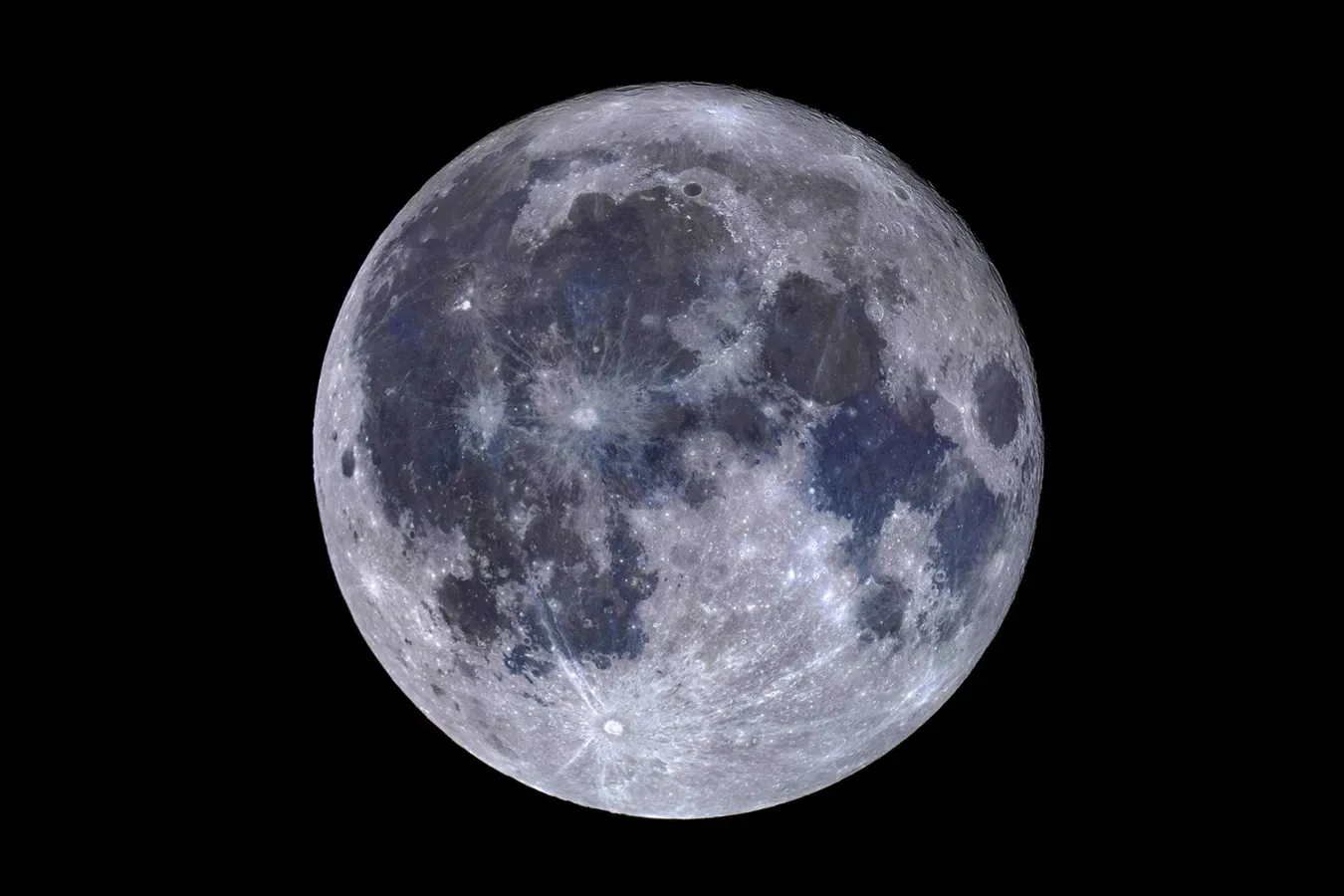
Our nearest celestial neighbour becomes a spectacular astronomical target.
Full Supermoon: Christmas Eve, 24 December
Traditionally known as the Cold Moon, December's Full Moon occurs when the Moon is relatively close to Earth in its orbit.
Signs of the Zodiac visible in December 2026
Taurus
one of the most prominent constellations during December evenings.
Its brightest star, Aldebaran, has a distinctive orange-red appearance.
Gemini
becomes increasingly prominent as December progresses. Its two brightest stars, Castor and Pollux, make the constellation relatively easy to recognise.
Aries
remains well positioned during December evenings.
Its relatively simple pattern of stars provides a useful reference point between Pisces and Taurus.
Cancer
Although it contains few bright stars, Cancer is home to the beautiful Beehive Cluster (M44).
December Constellations Over Tenerife
Orion: The Hunter
December is a fantastic month to discover Orion, one of the most recognisable constellations in the night sky.
Its famous three-star belt makes it easy to identify.
Look for brilliant blue-white Rigel and reddish Betelgeuse, two enormous stars with very different characteristics.
Orion also contains the spectacular Orion Nebula.
If the winter night sky had a celebrity, Orion would probably insist on top billing.
Auriga
Auriga, the Charioteer, is home to brilliant Capella, one of the brightest stars in the northern sky.
Auriga also contains several spectacular open star clusters.
Cassiopeia
The distinctive W-shaped constellation Cassiopeia remains prominent in the northern sky.
It's a useful starting point for finding the Double Cluster and navigating the winter Milky Way.
Perseus
Perseus is beautifully positioned during December evenings.
Its surrounding region contains numerous star clusters and fascinating deep-sky objects.
Canis Major and Sirius
Later in the evening, Canis Major rises into view.
Its brightest star, Sirius, is the brightest star in Earth's night sky.
Sirius often appears to sparkle in different colours when low on the horizon because of atmospheric turbulence.
No, it isn't flashing at us. Although it certainly knows how to attract attention.
Why Choose Night Skies Tenerife

Frequently Asked Questions About Stargazing in Tenerife in December
Is December a good month for stargazing in Tenerife?
Yes. December is an excellent month for stargazing in Tenerife, with spectacular winter constellations, planets, star clusters and the Geminid meteor shower.
The high-altitude surroundings of Teide National Park provide darker skies than Tenerife's coastal resorts, although clear weather and suitable observing conditions are essential.
What can you see in the night sky from Tenerife in December 2026?
Discover ToursDecember's night sky includes Saturn, Jupiter, Uranus, the Orion Nebula, the Pleiades, the Andromeda Galaxy and winter constellations including Orion, Taurus and Gemini.
The Geminid meteor shower and Christmas Eve Supermoon are additional highlights.
Can you see the Milky Way from Tenerife in December?
Discover ToursYes. Sections of the Milky Way remain visible during December, particularly through Cassiopeia, Perseus and Auriga.
However, the bright galactic centre associated with summer is no longer visible during the evening.
When is the Geminid meteor shower in Tenerife in 2026?
The Geminids peak overnight on December 13–14, 2026.
The shower is active for much of December, and favourable lunar conditions make 2026 a particularly promising year.
The strongest activity generally occurs later at night, although Geminid meteors can also appear during the evening.
How many shooting stars can you see during the Geminids?
Discover ToursHow many shooting stars can you see during the Geminids?
The Geminids can produce dozens of meteors per hour under ideal conditions, with higher theoretical rates possible around maximum.
Actual numbers depend on the time, weather, moonlight and observing location.
Shooting stars are natural events and cannot be guaranteed on a tour.
Can you see Orion from Tenerife in December?
Yes. Orion is one of December's most recognisable constellations, rising during the evening and becoming increasingly prominent as the night progresses.
Its famous three-star belt makes it easy to identify, and the constellation contains the magnificent Orion Nebula.
Can you see the Pleiades from Mount Teide?
Discover ToursYes. The Pleiades, or Seven Sisters, are beautifully positioned during December evenings.
The cluster is visible without optical equipment under suitable conditions, while binoculars and telescopes reveal many more stars.
What planets can you see from Tenerife in December 2026?
Discover ToursSaturn remains visible during the evening, while Jupiter rises later and becomes increasingly accessible as the night progresses.
Uranus and Neptune are also potential telescope targets with suitable equipment and observing conditions.
Can you see Saturn through a telescope in December?
Discover ToursYes. Saturn remains an evening target during December, although it gradually moves towards the western sky as the month progresses.
Through a telescope, its famous rings can be observed when conditions allow.
When is the New Moon in Tenerife in December 2026?
Discover ToursNew Moon occurs on December 9, 2026.
The surrounding nights provide particularly dark skies, making them attractive for observing faint galaxies, star clusters and meteor showers.
When is the Full Moon in Tenerife in December 2026?
Discover ToursThe Full Moon occurs on December 24, 2026, making Christmas Eve particularly special.
It is also a Supermoon, traditionally known as the Cold Moon.
Is stargazing worthwhile during a Full Supermoon?
Discover ToursAbsolutely, although it's a different experience.
Bright moonlight makes faint galaxies and stars more difficult to see, but the Moon itself becomes a spectacular astronomical attraction.
Our guides adapt observations to the conditions and the most interesting objects visible.
Where is the best place for stargazing in Tenerife?
Teide National Park is one of Tenerife's best-known stargazing destinations, thanks to its altitude, dark skies and distance from the island's brighter coastal resorts.
Night Skies Tenerife operates from Restaurante 7 Cañadas at 2,130 metres above sea level.
Do I need any astronomy experience to join a stargazing tour?
Not at all.
Our Starlight-certified guides use telescopes, lasers, storytelling and humour to make astronomy accessible to everyone.
Whether you're an enthusiast or can't tell Saturn from a streetlight, you're welcome.
What should I wear for stargazing on Mount Teide in December?
Bring warm layers, a jacket and suitable footwear.
Temperatures at over 2,000 metres can be considerably cooler than at Tenerife's coastal resorts, particularly after sunset.
Night Skies Tenerife also provides warm coats on request.
Can I book a Tenerife stargazing tour with hotel pickup and dinner?
Yes. Our coach Sunset & Stargazing Tours include pickup and return from designated locations in South Tenerife.
You can select an optional three-course Canarian dinner at Restaurante 7 Cañadas, or choose a Self-Drive experience if you prefer to travel independently.
Our winter itinerary combines a guided journey through Teide National Park, sunset at Montaña Sámara, optional dinner and expert-led stargazing.