




Stargazing Tenerife in July 2026
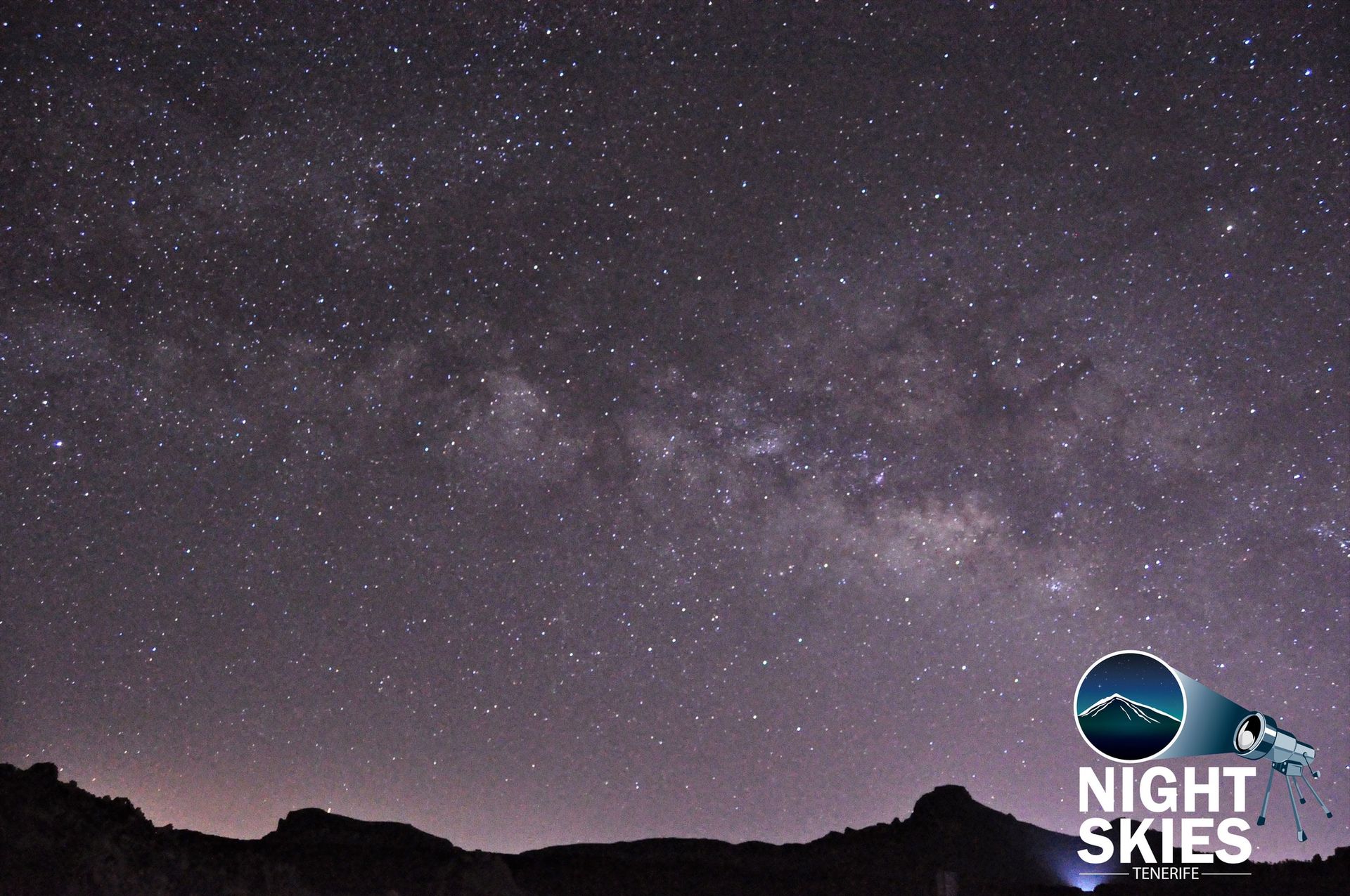
The Milky Way Returns to Centre Stage
July marks the peak season for viewing our home galaxy.
Stretching like a glowing river across the southern sky, the Milky Way is at its most impressive from Mount Teide. Far from city lights, countless stars become visible to the naked eye, revealing dark dust lanes, glowing star clouds and rich regions that are impossible to appreciate from most of Europe.
Your guides will help you understand where we sit within this vast spiral galaxy and use powerful telescopes to reveal incredible celestial objects hidden within it.
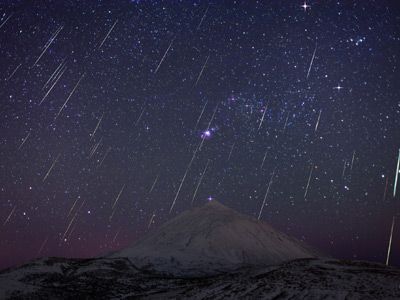
The Delta Aquariids Meteor Shower
The Delta Aquariids are an annual meteor shower that peaks in late July and early August, offering skywatchers the chance to see 20–25 meteors per hour under dark skies. The meteors appear to radiate from the constellation Aquarius, near the star Delta Aquarii, giving the shower its name.
Active From: July 12
Peak: Around 29-30 July
You might catch early meteors streaking across the Milky Way during your tour — an unexpected thrill for lucky skywatchers.
Moon Phases for July 2026
The Moon dramatically changes how many stars become visible, making each tour slightly different. The period around the New Moon on 17 July provides the darkest skies of the month and some of the best Milky Way viewing opportunities.
Third Quarter Moon
As the moon wanes, later nights become ideal for exploring faint deep-sky objects without lunar glare.
July 10, 2026
New Moon
This new moon brings the darkest skies. Perfect for viewing stars & galaxies with binoculars or telescopes.
July 17, 2026
First Quarter Moon
The lunar crescent returns, offering dramatic shadows across the lunar surface visible through telescopes.
July 24, 2026
Full Moon
Bright skies. Great for moon photography and dramatic landscapes, but limits faint stars.
July 2 and July 31, 2026
Galaxies, Star Clusters and Nebulae
Andromeda Galaxy
The Andromeda Galaxy (M31) is the nearest major galaxy to our own Milky Way, lying around 2.5 million light-years from Earth. On dark July nights above Mount Teide, it begins to rise in the north-east during the late evening, appearing as a faint, misty patch to the naked eye under ideal conditions. Through a telescope, you'll see the bright core of this magnificent spiral galaxy, home to an estimated one trillion stars. It's the most distant object most people will ever see with the naked eye, making Andromeda one of the true highlights of a summer stargazing experience in Tenerife.
Ring Nebula (M57)
Messier 57, also known as the Ring Nebula, is one of the most famous and well-studied planetary nebulae in the night sky.
At the heart of the Ring Nebula lies a white dwarf—the intensely hot, exposed core of the original star. This remnant emits powerful ultraviolet radiation, which energizes the surrounding gases and causes them to emit light, creating the nebula’s distinctive glow.
The Great Globular Cluster of Hercules
The Great Globular Cluster in Hercules, also known as Messier 13 (M13) or NGC 6205, is a prominent globular cluster located in the constellation Hercules. It's one of the brightest and most easily visible globular clusters from the Northern Hemisphere. M13 contains over 100,000 stars and is a popular target for amateur astronomers.
Signs of the Zodiac visible in June 2026
As darkness falls, many familiar zodiac constellations become visible.
Scorpius
The magnificent celestial scorpion dominates southern skies and contains the bright red giant star Antares.
Sagittarius
Often called "The Teapot", Sagittarius points directly towards the centre of our Milky Way Galaxy.
Libra
Visible in the western sky during early evening.
Capricornus
Representing the mythical Sea Goat, Capricornus is one of the oldest recognised constellations in the night sky.