





Stargazing Tenerife October 2026: What to See from Mount Teide
October is a fantastic month for stargazing in Tenerife, as the autumn night sky takes centre stage above Mount Teide.
The Milky Way is still visible, Andromeda climbs high into the evening sky and some of autumn's most recognisable constellations become increasingly prominent.
October 2026 also brings plenty of celestial action. Saturn reaches opposition, the Draconid and Orionid meteor showers provide opportunities to spot shooting stars, and beautifully dark skies arrive around the New Moon.
From planets and meteor showers to constellations and galaxies millions of light-years away, there's plenty to discover above Tenerife this October.
Join Night Skies Tenerife for much more than a stargazing tour. Your evening combines a light-hearted guided journey through the volcanic landscapes of Teide National Park, optional Canarian dining at 2,130 metres, a spectacular Mount Teide sunset and expert-led astronomy beneath Tenerife's crystal-clear skies.
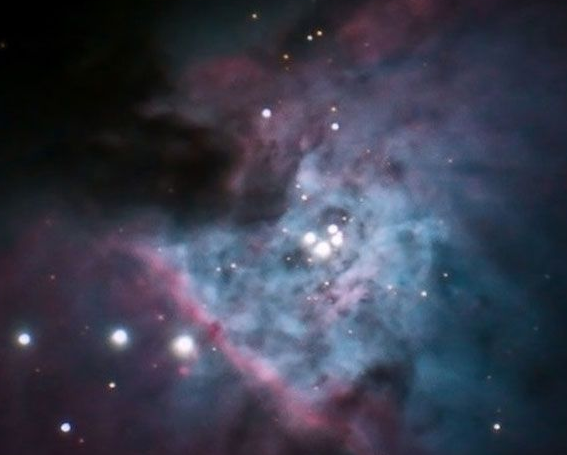
Galaxies, Star Clusters and Nebulae
The Milky Way in October
Summer may be over, but the Milky Way hasn't disappeared.
During October, its bright summer centre moves lower towards the western horizon earlier in the evening, while the great band of our galaxy remains visible through constellations including Cygnus, Cassiopeia and Perseus.
The famous Summer Triangle, formed by Vega, Deneb and Altair, is also still hanging on in the evening sky.
Andromeda Galaxy
The Andromeda Galaxy (M31) lies around 2.5 million light-years from Earth and becomes increasingly well positioned in the evening sky during autumn evenings.
Under sufficiently dark conditions, Andromeda can appear to the naked eye as a faint, misty patch. Through optical equipment, its bright central region becomes much easier to see.
And here's the extraordinary part. The light reaching your eyes tonight began its journey around 2.5 million years ago. You're looking a very long way back in time.
The Double Cluster
Look towards the constellations Perseus and Cassiopeia and you'll find another beautiful autumn target: the Double Cluster.
These two neighbouring open star clusters contain hundreds of stars and are particularly impressive through optical equipment.
Against Tenerife's dark mountain sky, this densely populated region of the Milky Way can be spectacular.
More October Deep-Sky Objects
Depending on the date, Moon, conditions and time of observation, October can also give us opportunities to explore objects including the Ring Nebula (M57) in Lyra, Dumbbell Nebula (M27) and numerous star clusters scattered through the Milky Way.
And as the nights progress through October, one of the most famous constellations of them all begins returning to our skies.
Orion is coming.
Shooting Stars in October 2026
If you enjoy making wishes, October provides more than one opportunity. Two of the month's best-known meteor showers are the Draconids and Orionids.
Draconid Meteor Shower – October 9
The Draconid meteor shower is active from around October 6–10 and reaches its peak on October 9.
Unlike most meteor showers, which tend to favour the small hours of the morning, the Draconids are particularly interesting because they're best observed during the evening.
Even better, conditions in 2026 are favourable.
The peak occurs immediately before New Moon, meaning very little moonlight will interfere with the dark sky.
The Draconids are associated with Comet 21P/Giacobini-Zinner and appear to originate from the constellation Draco.
Typical activity is relatively modest, so don't expect the sky to resemble a celestial fireworks display.
But keep looking upwards - You never know when one might appear.
Orionid Meteor Shower – October 21
Later in October comes one of the year's best-known meteor showers: the Orionids.
The shower is active from early October into November and reaches its broad maximum around October 21.
And the Orionids have a famous parent - Halley's Comet.
As Halley's Comet travels around the Sun, it leaves a stream of tiny particles behind. Every October, Earth passes through this debris.
Those tiny fragments hit our atmosphere at tremendous speed and produce the streaks of light we call shooting stars.
The Orionids can typically produce around 10–20 meteors per hour around maximum under favourable conditions, although a bright waxing gibbous Moon will interfere with the 2026 peak.
Planets Visible from Tenerife in September 2026
September isn't only about stars, galaxies and constellations. Some of our Solar System neighbours are joining the show too.
Saturn at Opposition – October 4
October begins with one of the month's biggest astronomical events.
Saturn reaches opposition on October 4, 2026.
Opposition occurs when Earth lies approximately between a planet and the Sun. Saturn consequently rises around sunset, remains visible through the night and is at its brightest for the year.
To the naked eye, Saturn looks like a bright, steady point of light.
Through a telescope - things get really interesting.
The planet's extraordinary ring system becomes visible, transforming that tiny point of light into one of the most instantly recognisable worlds in our Solar System.
Neptune, Jupiter and Mars
Neptune remains well positioned during October following its opposition in late September.
The most distant planet in our Solar System is far too faint to see with the naked eye, but with suitable equipment it can appear as a tiny blue-hued world.
It's an extraordinary thought.
Jupiter and Mars are primarily morning planets during October 2026, rising in the hours before dawn rather than forming part of our normal evening stargazing.
So if you've joined us for an evening beneath the stars and you still have the astronomy buzz, set the alarm - very early.
We'll understand if you don't.
Moon Phases for October 2026
October 3
- Third Quarter Moon
As the moon wanes, later nights become ideal for exploring faint deep-sky objects without lunar glare.
October 10 - New Moon
This new moon brings the darkest skies. Perfect for viewing stars & galaxies with binoculars or telescopes.
October 18 -
First Quarter Moon
The lunar crescent returns, offering dramatic shadows across the lunar surface visible through telescopes.
October 26 - Full Moon
Bright skies. Great for moon photography and dramatic landscapes, but limits faint stars.
Signs of the Zodiac visible in September 2026
Capricornus
Representing the mythical Sea Goat, Capricornus is one of the oldest recognised constellations in the night sky.
Aquarius
Becomes more prominent later in the evening and later in the month.
Pisces
Pisces, the Fishes, becomes beautifully positioned during autumn evenings.
Aries
As the evening progresses, Aries, the Ram, rises higher into the eastern sky.
October Constellations Over Tenerife
Pegasus
One of the easiest autumn patterns to find is the enormous Great Square of Pegasus.
Four bright stars create a huge square in the sky and provide an excellent starting point for navigating towards other autumn constellations.
Andromeda
Leading away from Pegasus is Andromeda.
This constellation is particularly important because it contains the Andromeda Galaxy, the most distant object most people can potentially see without optical aid.
Cassiopeia
Look north and you'll find one of the easiest constellations to recognise.
Cassiopeia forms a distinctive W shape amongst the stars. Depending on its orientation, you could argue it occasionally becomes an M.
Astronomy likes to keep us on our toes.
Perseus
Nearby lies Perseus, surrounded by a particularly rich region of the Milky Way and close to the spectacular Double Cluster.
Orion Returns
And then there's Orion.
By later October, one of the world's most recognisable constellations begins returning to the late-evening and overnight sky.
Look for the unmistakable line of three stars forming Orion's Belt.
As autumn moves towards winter, Orion will become one of the dominant constellations in Tenerife's night sky.
For now, he's making his entrance. Fashionably late, obviously.
Why Choose Night Skies Tenerife

Frequently Asked Questions About Stargazing in Tenerife in October
Is October a good month for stargazing in Tenerife?
Yes. October is an excellent month for stargazing in Tenerife, with autumn constellations becoming prominent, the Andromeda Galaxy well positioned and several notable astronomical events during October 2026.
From the high-altitude surroundings of Teide National Park, you can experience dramatically darker skies than in Tenerife's coastal resorts, making Mount Teide one of the island's most popular locations for stargazing.
What can you see in the night sky from Tenerife in October 2026?
Discover ToursOctober's night sky includes Saturn, Neptune, the Andromeda Galaxy, the Milky Way, Pegasus, Cassiopeia, Perseus and several zodiac constellations.
Later in the month, Orion also begins returning to the late-night sky.
Exactly what can be seen on any particular evening depends on the date, time, Moon phase, weather and observing conditions.
Can you see the Milky Way from Tenerife in October?
Discover ToursYes. The Milky Way can still be seen from Tenerife during October, particularly from dark locations such as Teide National Park.
The bright galactic centre visible during summer is moving lower and setting earlier, but the Milky Way continues across the autumn sky through areas including Cygnus, Cassiopeia and Perseus.
Dark nights around New Moon on October 10, 2026 provide particularly favourable conditions.
Can you see the Andromeda Galaxy from Mount Teide?
Discover ToursYes. October is a fantastic time to look for the Andromeda Galaxy from Mount Teide because it is well positioned in the autumn night sky.
Andromeda lies approximately 2.5 million light-years from Earth and, under sufficiently dark conditions, can appear to the naked eye as a faint patch of light.
Through optical equipment its brighter central region becomes much easier to see.
What planets can you see from Tenerife in October 2026?
Discover ToursSaturn is the standout evening planet during October 2026, reaching opposition on October 4 and remaining beautifully positioned for observation.
Neptune is also well positioned following its late-September opposition, although optical equipment is required to see it.
Jupiter and Mars are primarily morning objects during October rather than part of the normal evening sky.
Can you see Saturn from Tenerife in October 2026?
Discover ToursYes, and October 2026 is an especially good time to see it.
Saturn reaches opposition on October 4, when it is at its brightest for the year and visible for most of the night.
To the naked eye Saturn resembles a bright, steady point of light. Through a telescope, its extraordinary ring system can be observed.
Are there any meteor showers over Tenerife in October 2026?
Discover ToursYes. October brings two well-known meteor showers.
The Draconids peak around October 9, just before New Moon, creating particularly dark observing conditions in 2026.
The Orionids peak around October 21 and are produced by debris left behind by Halley's Comet. Moonlight will make conditions less favourable around the 2026 Orionid peak, although brighter meteors may still be visible.
Meteor activity is unpredictable, so shooting stars can never be guaranteed on a stargazing tour.
When is the New Moon in Tenerife in October 2026?
Discover ToursThe New Moon is October 10, 2026.
The nights surrounding New Moon are particularly attractive for dark-sky stargazing because there is very little moonlight competing with faint stars, galaxies and the Milky Way.
When is the Full Moon in Tenerife in October 2026?
Discover ToursThe Full Moon is October 26, 2026.
A bright Full Moon reduces the visibility of some faint stars and deep-sky objects, but it also creates excellent opportunities to observe the lunar surface and produces a spectacular atmosphere across the volcanic landscape of Teide National Park.
Is stargazing still worthwhile during a Full Moon?
Discover ToursAbsolutely, but it's a different experience.
Bright moonlight can make faint galaxies and sections of the Milky Way more difficult to see. However, the Moon itself becomes a spectacular astronomical target, with telescopes revealing craters, mountains and other features across its surface.
Our guides adapt each stargazing experience to the conditions and the most interesting objects visible that evening.
Where is the best place for stargazing in Tenerife?
Teide National Park is one of Tenerife's best-known locations for stargazing, thanks to its altitude, dark skies and distance from the brighter coastal resorts.
Night Skies Tenerife operates from our stargazing base at Restaurante 7 Cañadas, 2,130 metres above sea level, in the heart of Teide National Park.
Do I need any astronomy experience to join a stargazing tour?
Not at all.
Our Starlight-certified guides use telescopes, lasers, storytelling and a healthy dose of humour to make the night sky easy to understand, whether you're already an astronomy enthusiast or have absolutely no idea where to find Orion.
That's our job.
Your job is mostly to look up.
What should I wear for stargazing on Mount Teide in October?
Bring warm layers and suitable footwear. Temperatures at more than 2,000 metres can be considerably cooler than at Tenerife's coastal resorts, particularly after sunset.
Night Skies Tenerife also has warm coats available on request, so you can concentrate on the stars rather than wondering why you dressed for the beach.
Does Night Skies Tenerife include hotel pickup?
Our coach Sunset & Stargazing Tours include pickup and return from convenient locations in South Tenerife.
If you prefer to make your own way to Teide National Park, we also offer Self-Drive Sunset & Stargazing Tours, with or without dinner, as well as our astronomy-only Pure Stargazing Tour.
Can I book a Tenerife stargazing tour with dinner?
Yes. Selected Night Skies Tenerife experiences include an optional three-course Canarian dinner at Restaurante 7 Cañadas, our base at 2,130 metres inside Teide National Park.
Our full experience follows a distinctive journey:
Guided Journey → Dinner → Sunset → Stargazing
Choose the dinner option when booking if you'd like to enjoy the complete experience.