



Stargazing Tenerife November 2026: What to See from Mount Teide
November is a wonderful month for stargazing in Tenerife, as the autumn constellations make way for some of the most spectacular sights of the winter night sky.
Orion returns, the Pleiades sparkle above the volcanic landscapes of Teide National Park, and the magnificent Andromeda Galaxy remains beautifully positioned for evening observation.
But November 2026 has even more to offer.
Two meteor showers bring opportunities to spot shooting stars, Saturn continues to delight through telescopes, Uranus reaches opposition, and a spectacular Full Supermoon illuminates Tenerife's night sky.
From distant galaxies and planets to star clusters and constellations, there's plenty to discover above Mount Teide this November.
Join Night Skies Tenerife for much more than a stargazing tour. Your evening combines a light-hearted guided journey through Teide National Park, a spectacular sunset with a complimentary glass of cava or orange juice, optional three-course Canarian dining at 2,130 metres and expert-led astronomy beneath Tenerife's remarkable night skies.
Galaxies, Star Clusters and Nebulae
Andromeda Galaxy
November is an excellent month to discover one of the most extraordinary objects in our night sky.
The Andromeda Galaxy (M31) is our nearest large galactic neighbour, approximately 2.5 million light-years from Earth.
Under suitably dark skies, Andromeda can appear as a faint, hazy patch of light without a telescope.
That little smudge contains hundreds of billions of stars.
And the light you're seeing began travelling towards Earth approximately 2.5 million years ago.
Meanwhile, we get impatient when a webpage takes four seconds to load. Perspective is a wonderful thing.
The Pleiades: The Seven Sisters
One of November's most beautiful star clusters is the Pleiades (M45), also known as the Seven Sisters.
Found in the constellation Taurus, this brilliant collection of young blue stars becomes increasingly prominent in the evening sky as November progresses.
Although commonly called the Seven Sisters, most people can see around six bright stars with the naked eye, depending on conditions.
The cluster actually contains many more. Through binoculars or a telescope, the Pleiades reveal a beautiful concentration of stars.
A favourite of astronomers, photographers and anyone who appreciates a little celestial sparkle.
The Double Cluster
Located between the constellations Perseus and Cassiopeia, the Double Cluster consists of two spectacular neighbouring open star clusters.
Both are rich in stars and particularly rewarding through binoculars or a telescope.
November's dark evenings provide excellent opportunities to explore this beautiful region of the Milky Way.
The Orion Nebula (M42)
Approximately 1,300 light-years away, this enormous cloud of gas and dust is a stellar nursery where new stars are being born.
It becomes increasingly accessible later in November, particularly on tours finishing later in the evening.
Through a telescope, its luminous central region can be a wonderful sight.
An entire star factory. No hard hats required.
Shooting Stars in November 2026
November offers two particularly interesting meteor showers: the Taurids and the Leonids. And they have very different personalities.
Taurid Meteor Showers: November 5 and 12
The Taurids are famous for producing occasional bright, slow-moving meteors known as fireballs.
There are two overlapping streams:
- Southern Taurids: peak around November 5.
- Northern Taurids: peak around November 12.
Unlike some meteor showers, the Taurids aren't particularly prolific. Under ideal conditions, each stream generally produces only a handful of meteors per hour.
But what they lack in quantity, they can occasionally make up for in spectacle.
Some Taurid meteors are exceptionally bright.
The Northern Taurids benefit from favourable observing conditions in 2026, with New Moon occurring on November 9.
And because Taurus rises during the evening, there's a chance of seeing Taurid meteors during normal stargazing hours.
We can't promise a fireball. But we'd certainly be delighted if one dropped by.
Leonid Meteor Shower: November 17–18
The Leonid meteor shower reaches its peak overnight on November 17–18, 2026.
These fast-moving meteors originate from debris left behind by Comet 55P/Tempel-Tuttle.
The Leonids can produce around 10–15 meteors per hour under ideal conditions, although actual numbers vary.
The First Quarter Moon will brighten the early evening, but conditions improve after the Moon sets.
The best viewing opportunities are generally during the early hours of the morning, rather than during normal Night Skies Tenerife tour times.
And here's something remarkable.
The Leonids have occasionally produced spectacular meteor storms in the past.
We're not expecting one this November. But the universe does have a history of surprising us.
Planets Visible from Tenerife in November 2026
Saturn: Still Stealing the Show
Following its October opposition, Saturn remains one of November's standout evening planets.
Visible after sunset, the ringed planet is beautifully positioned for observation during the earlier part of the night.
To the naked eye, Saturn resembles a bright, steady point of light.
Through a telescope, its remarkable rings become visible.
And there's something rather magical about seeing Saturn for the first time.
It's more than a billion kilometres away.
Yet there it is, looking suspiciously perfect. No, we haven't put a photograph inside the telescope. We promise.
Uranus at Opposition: November 25
Uranus reaches opposition on November 25, 2026, making this one of the best times of the year to observe the distant ice giant.
At opposition, Earth lies approximately between Uranus and the Sun, placing the planet opposite the Sun in our sky.
Uranus rises around sunset and remains visible throughout the night.
Under exceptionally dark conditions, it is technically close to the limit of naked-eye visibility, but binoculars or a telescope are far more practical.
Through suitable equipment, Uranus can appear as a tiny blue-green disc.
At nearly three billion kilometres from the Sun, it's a remarkable world to observe. Suddenly the journey up Mount Teide doesn't seem quite so far.
Moon Phases for November 2026
November 1
- Third Quarter Moon
With the Moon rising later in the evening, the early part of the night offers increasingly favourable conditions for observing faint stars, galaxies and other deep-sky objects.
November 9
- New Moon
This is the darkest lunar period of the month and an excellent time to explore the Milky Way, Andromeda, the Pleiades and other faint celestial objects.
November 17 -
First Quarter Moon
This is an excellent phase for telescope observations. Our nearest celestial neighbour becomes an attraction in its own right.
November 24
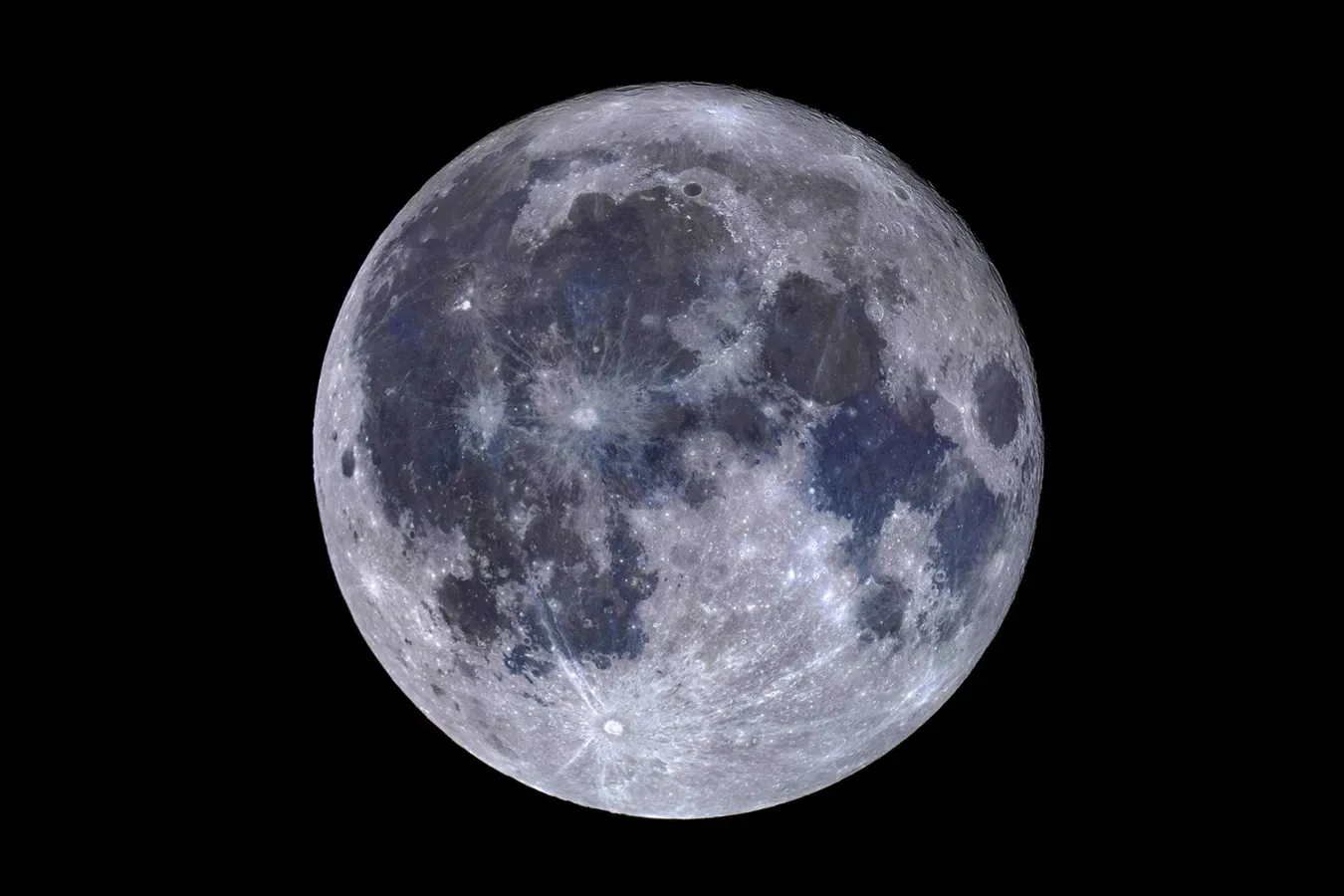
- Full Supermoon
Traditionally known as the Beaver Moon, it will appear especially bright in Tenerife's night sky.
Signs of the Zodiac visible in November 2026
Pisces
Pisces, the Fishes, becomes beautifully positioned during autumn evenings.
Aries
As the evening progresses, Aries, the Ram, rises higher into the eastern sky.
Taurus
Taurus, the Bull, becomes increasingly prominent as November progresses.
Gemini
Gemini, the Twins, begins rising into view. Its two brightest stars, Castor and Pollux, help identify the constellation.
November Constellations Over Tenerife
Orion: The Hunter Returns
One of the most famous constellations in the night sky is back.
Orion becomes increasingly visible during November, particularly later in the evening.
Its three-star belt is unmistakable.
Look for brilliant blue-white Rigel and reddish Betelgeuse, two stars with very different personalities.
Orion also contains the extraordinary Orion Nebula, one of the sky's most famous stellar nurseries. Winter's favourite celebrity has arrived.
Auriga
Auriga, the Charioteer, becomes increasingly prominent towards winter.
Its brilliant star Capella is one of the brightest stars in the northern sky.
Auriga also contains several beautiful open star clusters.
A wonderful reminder that the winter sky is beginning to arrive.
Cassiopeia
The distinctive W-shaped constellation Cassiopeia remains prominent in the northern sky.
It's a wonderful starting point for exploring the Milky Way and finding the nearby Double Cluster.
Perseus
Perseus climbs high into November's evening sky.
Rich in stars and deep-sky objects, it's particularly rewarding for telescope observations.
Pegasus and Andromeda
The Great Square of Pegasus remains a familiar autumn landmark.
Nearby Andromeda contains the magnificent Andromeda Galaxy, one of the highlights of November stargazing.
Why Choose Night Skies Tenerife

Frequently Asked Questions About Stargazing in Tenerife in November
Is November a good month for stargazing in Tenerife?
Yes. November is an excellent month for stargazing in Tenerife, with prominent autumn and winter constellations, Saturn visible during the evening and opportunities to observe galaxies, star clusters and meteor showers.
Teide National Park's altitude and distance from coastal light pollution make it particularly attractive for astronomy.
What can you see in the night sky from Tenerife in November 2026?
Discover ToursNovember's highlights include Saturn, Uranus, Neptune, the Andromeda Galaxy, the Pleiades, Orion, Cassiopeia and Perseus, alongside the Taurid and Leonid meteor showers.
Visibility depends on the date, observing time, Moon phase and weather.
Can you see the Milky Way from Tenerife in November?
Discover ToursYes. Sections of the Milky Way remain visible during November, although the bright galactic centre associated with summer is no longer prominent during the evening.
Dark skies around New Moon on November 9 provide particularly favourable conditions.
Can you see the Andromeda Galaxy from Mount Teide?
Discover ToursYes. November is an excellent month to observe Andromeda, approximately 2.5 million light-years away.
Under sufficiently dark conditions it may appear as a faint patch of light to the naked eye, while binoculars and telescopes provide a clearer view.
Can you see Orion from Tenerife in November?
Yes. Orion becomes increasingly prominent during November, particularly later in the evening.
Its distinctive three-star belt makes it one of the easiest constellations to recognise, and it contains the spectacular Orion Nebula.
What planets can you see from Tenerife in November 2026?
Discover ToursSaturn is the main evening planet, while Uranus reaches opposition on November 25 and Neptune remains observable with suitable equipment.
Jupiter, Mars and Venus are primarily morning objects during November.
Can you see Saturn from Tenerife in November 2026?
Discover ToursYes. Saturn remains well positioned during November evenings, providing opportunities to observe its famous rings through a telescope when conditions allow.
Are there any meteor showers over Tenerife in November 2026?
Discover ToursYes. The Southern Taurids peak around November 5, the Northern Taurids around November 12, and the Leonids overnight November 17–18.
The Taurids are known for occasional bright fireballs, while the Leonids produce fast-moving meteors.
Shooting stars are unpredictable and cannot be guaranteed.
When is the New Moon in Tenerife in November 2026?
Discover ToursNew Moon occurs on November 9, 2026.
The surrounding nights offer particularly dark skies, making them attractive for observing faint galaxies, star clusters and the Milky Way.
When is the Full Moon in Tenerife in November 2026?
Discover ToursThe Full Moon occurs on November 24, 2026.
It is also a Supermoon, traditionally called the Beaver Moon, and will illuminate the volcanic landscape of Teide National Park.
Is stargazing worthwhile during a Supermoon?
Discover ToursAbsolutely, although the experience is different.
Bright moonlight makes faint galaxies and stars more difficult to see, but the Moon itself becomes a spectacular target. Telescopes can reveal lunar features, with crater and mountain shadows particularly striking away from the exact Full Moon phase.
Where is the best place for stargazing in Tenerife?
Teide National Park is one of Tenerife's best-known stargazing destinations, thanks to its altitude, dark skies and distance from the island's brighter coastal resorts.
Night Skies Tenerife operates from Restaurante 7 Cañadas, 2,130 metres above sea level.
Do I need any astronomy experience to join a stargazing tour?
Not at all.
Our Starlight-certified guides use telescopes, lasers, storytelling and humour to make astronomy accessible to everyone.
Whether you're an enthusiast or can't tell Saturn from a streetlight, you're welcome.
What should I wear for stargazing on Mount Teide in October?
Bring warm layers, a jacket and suitable footwear.
Temperatures at over 2,000 metres can be considerably cooler than at Tenerife's coastal resorts, particularly after sunset.
Night Skies Tenerife also provides warm coats on request.
Can I book a Tenerife stargazing tour with hotel pickup and dinner?
Yes. Our coach Sunset & Stargazing Tours include hotel pickup and return from designated locations in South Tenerife.
You can choose an optional three-course Canarian dinner at Restaurante 7 Cañadas, or book a Self-Drive experience if you prefer to travel independently.
Our November experience combines a guided journey, sunset in Teide National Park, optional dinner and expert-led stargazing.